 Doğu Türkistan Haberleri – Son Dakika – Uygur Haber Ajansı Doğu Türkistan Haberleri ve Çin haberleri; toplama kampları, istihbarat savaşları, İnterpol suiistimalleri, sınır ötesi Uygur avı ve küresel PSC tehdidi analizleri.

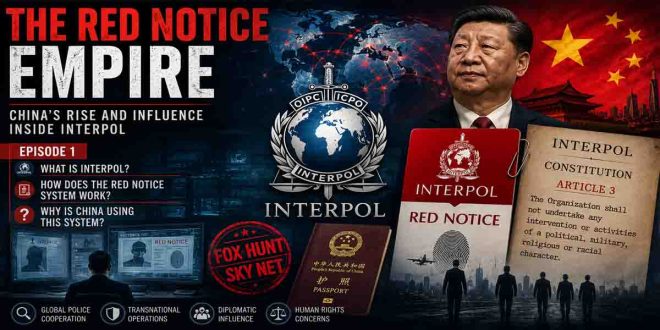
This investigative series is not merely a standard news report or a dossier focused on a single event. The investigation before you is based on one of the most comprehensive international journalism projects in recent years, exposing how China instrumentalizes international organizations, constructs cross-border suppression mechanisms, and how these operations impact individuals and communities living across various countries worldwide.
The foundation of this research is built upon the “China Targets” investigation conducted by the International Consortium of Investigative Journalists (ICIJ). Spanning approximately ten months, this cross-border operation was prepared through the collaborative efforts of 43 media organizations from 30 countries and over 100 investigative journalists. Within the scope of the investigation, interviews were conducted with 105 victims living in 23 different countries. Millions of data points were analyzed, including covert audio and video recordings, confidential court files, Interpol documents, internal communications belonging to Chinese authorities, and numerous official records. The resulting findings clearly demonstrate that Beijing has established a multi-layered suppression system targeting dissidents, businesspeople, human rights defenders, and exiled diaspora communities far beyond its own borders.
While “The Red Notice Empire” series is rooted in the findings of this landmark international investigation, it has been significantly enriched with open-source intelligence, international legal documents, academic research, human rights reports, and public judicial files to serve as a comprehensive reference source. Our objective is not merely to narrate isolated incidents, but to document exactly how this vast mechanism operates—ranging from the manipulation of the Interpol Red Notice system and the execution of “Fox Hunt” operations, to systemic coercion leveraging family members left behind and cross-border digital surveillance.
Every single case you will read in the upcoming chapters is a piece of a much larger puzzle. This picture reveals how international law, police cooperation mechanisms, and diplomatic relations can be weaponized into tools of political persecution, while simultaneously exposing the severe consequences that state-sponsored transnational repression inflicts upon global security, human rights, and the rule of law.
What is Interpol?
The International Criminal Police Organization (Interpol) was established to facilitate police cooperation between nations in combating international crime. Today, it operates as the world’s largest law enforcement coordination network. Headquartered in Lyon, France, the organization connects 196 member states under a unified communication network, streamlining information sharing and judicial cooperation against transnational crime.
Interpol’s primary mission is to enable national police forces to communicate directly with one another, assist in the identification of international fugitives, and strengthen coordination against cross-border threats such as terrorism, human trafficking, drug trafficking, organized crime, cybercrime, child exploitation, and financial crimes. Crucially, the organization possesses no police force of its own; it holds no authority to conduct field operations, execute search warrants, or make arrests in any sovereign state. Instead, Interpol functions as a global information-sharing hub that relies entirely on the requests and data provided by its member states.
The bedrock of Interpol’s international credibility is its strict principle of political neutrality. Article 3 of the Interpol Constitution explicitly forbids the organization from undertaking any intervention or activities of a political, military, religious, or racial character. This constitutional guardrail was established to prevent the organization from being weaponized in the domestic political struggles of any state, ensuring that global police cooperation remains strictly confined to ordinary criminal law.
Consequently, for many decades, Interpol was widely recognized as one of the most vital, neutral law enforcement cooperation mechanisms within the international legal order. Through notices published among member states, centralized databases, and intelligence-sharing systems, thousands of fugitive criminals have been tracked down, missing persons located, human trafficking rings dismantled, and large-scale operations against organized crime syndicates successfully coordinated.
In recent years, however, mounting allegations surrounding certain authoritarian regimes have sparked intense international debate over whether Interpol’s crime-fighting tools are being hijacked for political ends. Reports from international human rights organizations, landmark court rulings, and investigative journalism dossiers indicate that applications made through the Red Notice system are increasingly being utilized to suppress political dissidents, exiled activists, journalists, and independent businesspeople rather than apprehending genuine criminals.
How did a system designed to streamline the tracking of international fugitives transform into a conduit for border-transcending political repression? The answer lies within the architecture of Interpol’s most heavily debated instrument—the Red Notice system—and specifically, within the global manhunt strategy developed by China over the past decade.
How Does the Red Notice System Work?
When Interpol is mentioned publicly, the first application that comes to mind is undoubtedly the Red Notice system. Yet, contrary to widespread public perception, an Interpol Red Notice is not an international arrest warrant.
A Red Notice is an international alert and information-sharing notification issued at the request of an Interpol member state. It is distributed to all member nations to locate a person facing criminal prosecution or a prison sentence, facilitate their provisional arrest, and initiate formal extradition proceedings. In other words, Interpol does not directly order the arrest of any individual; it merely processes the information provided by the requesting state’s judicial authorities through established protocols and transmits it to the rest of the network.
Therefore, in terms of its legal nature, a Red Notice is not a binding international mandate but a diplomatic call for cooperation submitted to national authorities for evaluation. Whether an individual is stopped, detained, or placed into extradition proceedings depends entirely on the domestic laws, international treaties, and the independent judicial rulings of the country where the individual is located.
Consequently, implementation practices vary significantly across jurisdictions:
-
The United States: Law enforcement agencies do not automatically arrest individuals based solely on an Interpol Red Notice.
-
Europe (e.g., France, Italy, Albania): National legislation allows a Red Notice to serve as sufficient legal grounds for provisional detention.
However, even in countries where detention is permitted, immediate extradition is never guaranteed. Every extradition request is evaluated independently by domestic courts, which carefully examine the nature of the charges, the sufficiency of the evidence, international human rights obligations, and the specific risks the individual would face if returned to the requesting state.
To oversee compliance with international law within this framework, Interpol utilizes a dedicated oversight body: the Commission for the Control of Interpol’s Files (CCF). Composed of independent legal and data-protection experts, this commission is tasked with ensuring that all records stored in Interpol’s databases—including Red Notices—comply with the organization’s Constitution and data-processing rules. Individuals targeted by a Red Notice have the legal right to petition the CCF to request the deletion or correction of their files.
In recent years, a significant portion of the applications landing before the CCF consists of Red Notice requests alleged to be politically motivated. International court rulings and human rights watchdogs have continuously brought these cases to light, demonstrating how certain authoritarian administrations attempt to exploit Interpol’s infrastructure to pressure exiled activists, independent business figures, and media professionals. As a result, the role of the CCF has evolved beyond a routine technical auditing body into the primary line of defense protecting Interpol’s political neutrality.
Despite these regulatory checks and balances, controversies surrounding the systemic abuse of Interpol’s channels remain unresolved. Over the last decade, empirical research has demonstrated that certain nations are systematically attempting to steer international law enforcement cooperation mechanisms to serve broader geopolitical and domestic security agendas.
It is precisely at this juncture that China began viewing the capabilities offered by Interpol not merely as a technical instrument for combating standard crime, but as a critical component of a much wider, state-sponsored global tracking strategy designed to project power far beyond its sovereign borders.
Official statistics from Beijing claim that over the past decade, China has successfully located and repatriated at least 479 criminal suspects using Interpol tools, including 62 targets from its publicly declared “Top 100 Most Wanted Red Notice” list.
However, the reality behind these figures is far more sinister. As the machinery of this system fell into place, the regime in Beijing began expanding the boundaries of the Red Notice mechanism to fulfill its own ideological goals.
As a result, ordinary fugitives were no longer the sole targets; businesspeople, political dissidents, and exiled communities were systematically swept into China’s global web of surveillance and control.
Next Chapter: “An Unexpected Call in Bordeaux: Jack Ma’s Covert Mission” – How China’s wealthiest tycoon was weaponized by Beijing to call his former business partner H. in the French wine country, delivering a chilling ultimatum on behalf of the regime.
The Xi Jinping Era: “Bring Them Back Wherever They Are in the World”
Chinese President Xi Jinping’s ascension to the position of General Secretary of the Chinese Communist Party in 2012 profoundly transformed not only domestic political dynamics but also Beijing’s international security and legal policies. From his very first years in office, the Xi administration placed “combining corruption” at the absolute center of state policy, defining this initiative not as a localized purge, but as a long-term campaign to be aggressively waged across all corners of the globe.
According to the administration in Beijing, numerous individuals who had allegedly misused public resources or engaged in financial crimes had fled investigative authorities to settle abroad. Chinese officials aimed not only to secure the repatriation of these individuals but also to completely shatter the notion that fugitives could ever find a secure sanctuary beyond China’s borders.
Xi Jinping explicitly articulated this doctrine across multiple international summits and high-level sessions of the Chinese Communist Party. In speeches broadcasted across state media channels, he heavily emphasized that corruption suspects must be pursued relentlessly no matter where they fled, issuing the following strict directive:
“We must not allow foreign countries to become a safe haven for corrupt elements. Wherever they flee in the world, we must bring them back and bring them before justice. If necessary, we must pursue them for five years, ten years, or even twenty years.”
In the years that followed, this declaration was adopted as the foundational political doctrine governing China’s transnational operations. For the administration in Beijing, the issue was no longer merely about apprehending fugitives; it was about projecting state authority far beyond sovereign borders.
A pivotal institution in executing this global strategy was the Central Commission for Discipline Inspection (CCDI), a powerful body operating under the Chinese Communist Party. Tasked with spearheading internal party discipline investigations and coordinating high-profile corruption cases, the Commission was granted extraordinary powers during the Xi Jinping era. Working in tight coordination with prosecutors, public security units, and other intelligence organs within China, the CCDI assumed a central role in tracking down individuals believed to have fled abroad and formulating strategic options for their repatriation.
The approach orchestrated by the Xi administration did not merely aim to expedite criminal investigations. It sought to prevent potential escapes and send an unmistakable message to those already overseas: leaving China would never mean escaping the reach of the state.
Aligned with this objective, the Chinese government adopted a systematic policy of “cutting off escape routes” for targeted individuals. Freezing the global financial assets of suspects, escalating structural coercion against their family members remaining in China, intensifying international law enforcement cooperation, and deploying aggressive diplomatic interventions became the pillars of this strategy. Official statements heavily reiterated the dual goals of “completely sealing off exit corridors” and ensuring that “no fugitive could ever secure a safe harbor.”
These directives by Xi Jinping quickly shifted from political rhetoric into operational reality. To execute these goals, the Chinese government launched the most extensive cross-border tracking campaigns in the nation’s history—operations that would lay the groundwork for two highly controversial global programs: Fox Hunt and Sky Net.
The Birth of Operation Fox Hunt and Operation Sky Net
Xi Jinping’s direct order to “bring them back wherever they are in the world” rapidly evolved from a political speech into a highly organized state apparatus. The Chinese administration deployed two of the most comprehensive transnational tracking programs in history to identify, monitor, and repatriate individuals targeted by the state: Operation Fox Hunt and Operation Sky Net.
Launched initially in 2014, Operation Fox Hunt was officially designed to locate and repatriate individuals who had fled abroad after allegedly committing embezzlement, bribery, and various financial crimes. Coordinated directly by the Chinese Ministry of Public Security, the operation sought to exploit Interpol channels, bilateral police agreements, and diplomatic leverage to track down fugitive suspects.
Introduced just one year later, Operation Sky Net significantly expanded the scope of Fox Hunt. Spearheaded by the Central Commission for Discipline Inspection (CCDI), this broader initiative encompassed not just the apprehension of fugitives, but also the systematic identification of overseas financial assets, the monitoring of cross-border capital flows, and the establishment of deeper ties with international institutions. Consequently, while Fox Hunt maintained a sharper focus on operational tracking and field activities, Sky Net provided a broader framework that reinforced these activities with diplomatic, financial, and legal instruments.
The Chinese government presented both operations to the international community as transparent contributions to the global fight against corruption. State media outlets continuously broadcasted warnings that “no fugitive would find a safe haven” and that “those who flee will sooner or later face justice.” Beijing publicly credited these operations with the successful repatriation of hundreds of suspects and the recovery of billions of dollars in illicitly transferred assets.
However, the international community evaluated this rapid expansion through a vastly different lens. Human rights organizations, legal scholars, and investigative journalists documented that Fox Hunt and Sky Net were not exclusively confined to economic crimes. In numerous documented cases, political dissidents, exiled activists, journalists, independent business professionals, and members of ethnic or religious minority groups became the primary targets of these operations.
International investigations published in recent years have demonstrated that Chinese security units do not rely solely on formal, transparent extradition treaties. Instead, operations frequently utilize extrajudicial tactics: targets receive direct threatening phone calls, severe pressure is applied to their family members at home, assets are arbitrarily frozen, business relationships are systematically targeted, and individuals are placed under immense psychological duress to compel what Beijing terms a “voluntary return.” These systemic practices have sparked intense international debates regarding the legality of Fox Hunt and Sky Net under international law.
United Nations rapporteurs, global human rights monitors, and legal experts recognize the sovereign right of nations to combat transnational crime; however, they emphasize that such efforts must adhere strictly to international legal frameworks, the principle of a fair trial, the non-refoulement principle (which prohibits returning individuals to countries where they face persecution), and core human rights protections. As a result, China’s global operations have become a flashpoint of contention—not only concerning security policies but also regarding state sovereignty, international police ethics, and human rights law.
The success of these global operations relied heavily on more than just China’s internal security apparatus; it required the active utilization of international law enforcement networks. As Beijing sought to extract greater utility from the infrastructure provided by Interpol, it simultaneously began aggressively expanding its institutional influence within the organization. The most prominent figure tracking this institutional shift was a high-ranking Chinese security bureaucrat who would soon rise to the presidency of Interpol itself: Meng Hongwei.
Next Chapter: “The Rise of China Within Interpol and the Mystery of Meng Hongwei” – How Beijing secured the presidency of the world’s largest police network, and the shocking internal power struggle that led to the sudden disappearance of its own director.
China’s Rise Within Interpol
During the years when China’s transnational tracking strategy began taking definitive shape, another striking development unfolded on the international stage: Beijing’s steadily mounting institutional influence within Interpol. The Xi Jinping administration did not merely launch unilateral initiatives like Operation Fox Hunt and Operation Sky Net; it simultaneously sought a far more visible and influential role within global security institutions. The most prominent manifestation of this geopolitical push was the meteoric rise of a high-ranking Chinese security bureaucrat: Meng Hongwei.
Having spent decades climbing the ranks of the Chinese Ministry of Public Security and the state’s domestic law enforcement bureaucracy, Meng emerged as one of the most critical figures representing China in international police cooperation. After serving in various capacities within Interpol’s executive organs, Meng was elected President of the organization in 2016. This marked the first time in history that a Chinese citizen assumed the presidency of the world’s largest international law enforcement coordination network.
In institutional terms, the President of Interpol does not command the daily operational or administrative functions of the organization; those executive responsibilities lie squarely with the General Secretariat. However, the Presidency carries immense symbolic and diplomatic weight. The President chairs the Interpol General Assembly and the Executive Committee, effectively shaping strategic priorities and representing the global body across high-level international platforms. Consequently, Meng Hongwei’s election was widely interpreted not merely as a personal career milestone, but as a definitive milestone of China’s expanding influence in global security diplomacy.
During this same period, China reinforced its presence within Interpol’s Executive Committee and aggressively expanded its bilateral partnerships with foreign law enforcement agencies. Beijing consistently positioned itself as an indispensable international actor dedicated to combating terrorism, cybercrime, and financial fraud, utilizing the Interpol framework as a premier diplomatic conduit to deepen these collaborative ties.
However, these developments were met with deep caution by human rights organizations and legal scholars. The global expansion of Operations Fox Hunt and Sky Net happening in parallel with Beijing’s institutional rise stoked international anxieties that Interpol’s neutral channels could be subtly repurposed for political persecution. While Interpol’s decision-making frameworks are inherently collective and structurally insulated from the unilateral control of any single nation, China’s surging visibility within the organization became a focal point of intense international scrutiny.
These systemic tensions escalated into an unprecedented international scandal in 2018. During a routine trip from France to China, Meng Hongwei abruptly vanished. For days, his whereabouts remained completely unknown to the international community. Chinese authorities eventually broke the silence, announcing that Meng had been placed under state detention on charges of corruption. Shortly thereafter, his resignation from the Interpol Presidency was announced, followed by his trial and subsequent imprisonment within China’s closed judicial system.
The Meng Hongwei affair sent shockwaves through the global diplomatic community. On one hand, it was parsed as a stark demonstration of the Xi administration’s uncompromising internal anti-corruption purges targeting its own elite security apparatus. On the other hand, it ignited fierce global debates regarding the independence of international institutions and the sheer boundary-transcending reach of Beijing’s domestic power. The incident thrust structural critiques regarding Interpol’s neutrality back into the media spotlight and forced Western governments to more critically examine the global dimensions of China’s security footprint.
China’s Increasing Influence on Interpol
Beijing’s expanding presence within Interpol extended far beyond high-level leadership appointments. Throughout this era, the Chinese government systematically increased its financial contributions to international police cooperation mechanisms while taking on a leading role in multilateral initiatives targeting transnational crime. This multi-layered approach formed a core pillar of China’s broader strategy to reshape the global security architecture.
Interpol’s operational budget relies heavily on statutory contributions alongside voluntary financial injections from its member nations. In recent years, China distinguished itself by heavily financing the organization’s capacity-building programs, specialized training initiatives, and global field operations. In official communiqués, Beijing framed these substantial financial commitments as part of its shared global responsibility to enhance the international community’s capacity to confront sophisticated criminal networks.
Yet, China went beyond serving as a conventional financial benefactor; it systematically broadened its bilateral and multilateral operational treaties. Beijing established joint task forces and intelligence-sharing mechanisms with numerous countries to target terrorism, cyber warfare, organized crime networks, and cross-border money laundering syndicates. The Chinese leadership continually classified these security pacts as indispensable components of modern global stability.
Simultaneously, the Chinese security apparatus became markedly more visible across international summits, technical working groups, and law enforcement forums. Joint training programs, expert exchanges, and technical coordination initiatives exponentially widened the interface between Chinese law enforcement and foreign police agencies.
Nevertheless, this rapid institutional integration introduced profound legal and ethical dilemmas. Global human rights monitors and international legal experts repeatedly warned that the expanding footprint of authoritarian regimes within global law enforcement bodies carries an inherent risk: the potential weaponization of neutral systems for extrajudicial state objectives. In particular, mounting allegations that certain Red Notice applications submitted by Beijing carried distinct political motives triggered intense debates over the efficacy of Interpol’s internal vetting and data-protection oversight.
Comprehensive investigations conducted by the International Consortium of Investigative Journalists (ICIJ), alongside human rights watchdogs and independent jurists, exposed that China’s transnational operations do not rely solely on formal, rule-bound extradition treaties. In numerous documented instances, the state deployed parallel extrajudicial tactics: aggressive diplomatic maneuvering, economic leverage, harassment directed at family members inside China, and covert, informal repatriation squads operating on foreign soil. Consequently, the exact legal safeguards governing how Interpol channels are utilized became a matter of urgent concern within international legal circles.
To be sure, these systemic concerns do not imply that Interpol’s institutional architecture operates under the unilateral command of any single capital. The organization remains a robust, multilateral body composed of 196 member states, with checks and balances distributed across diverse governing organs. However, the geopolitical friction of recent years has underscored a critical reality: rigorous, transparent independent oversight mechanisms are absolutely vital to prevent global security networks from being exploited for state-sponsored political repression.
Conclusion
During the Xi Jinping era, Operations Fox Hunt and Sky Net were officially presented to the world as transparent, rule-of-law security initiatives designed exclusively to combat corruption and repatriate financial fugitives. Beijing consistently maintained that these global campaigns were aimed solely at protecting public resources and upholding judicial accountability.
However, over the past decade, a mounting body of evidence—including landmark international court rulings, detailed assessments by United Nations rapporteurs, comprehensive human rights dossiers, and the ICIJ’s groundbreaking “China Targets” investigation—has revealed a vastly different operational reality. These findings conclusively demonstrate that the machinery of this transnational system extends far beyond standard white-collar crime. Investigations have brought to light numerous cases where independent business leaders, political dissidents, Uyghur activists, Falun Gong practitioners, journalists, and exiled diaspora members living across the globe became the primary targets of systematic cross-border coercion.
Consequently, for China, Interpol emerged as more than just a technical platform for facilitating international police cooperation; it became a strategic component of a much wider, highly sophisticated global mechanism designed to track, pressure, and repatriate targeted individuals. At the very center of this international debate remains a fundamental question: To what extent can an international framework established to combat global crime be shielded from the geopolitical and political objectives of sovereign states?
In the second part of “The Red Notice Empire” investigative series, we will dissect one of the most striking case studies of this mechanism in action. Beginning in the historic wine country of Bordeaux, France, and involving one of the most globally recognized tycoons of modern commerce, Jack Ma, this upcoming chapter will expose the precise, chilling reality of how China’s transnational repression apparatus operates behind closed doors.
Next Chapter: “An Unexpected Call in Bordeaux: Jack Ma’s Covert Mission”

East Turkestan Bulletin News Agency / NEWS CENTER
SOURCES & REFERENCES
This chapter was prepared using official documents, investigative reports, legal frameworks, and publicly available sources from the following international organizations and institutions.
International Criminal Police Organization (INTERPOL)
INTERPOL – Official Website
https://www.interpol.int
Red Notices
https://www.interpol.int/How-we-work/Notices/Red-Notices
Constitution of INTERPOL (Including Article 3)
https://www.interpol.int/Who-we-are/Legal-framework/Constitution-of-Interpol
Commission for the Control of INTERPOL’s Files (CCF)
https://www.interpol.int/Who-we-are/Commission-for-the-Control-of-INTERPOL-s-Files-CCF
International Consortium of Investigative Journalists (ICIJ)
China Targets Investigation
https://www.icij.org/investigations/china-targets/
How China Uses INTERPOL to Pursue Targets Abroad
https://www.icij.org/investigations/china-targets/interpol-red-notice-police-warrant-jack-ma/
Official Sources of the People’s Republic of China
Ministry of Public Security of the People’s Republic of China
https://www.mps.gov.cn
Central Commission for Discipline Inspection (CCDI)
https://www.ccdi.gov.cn
Xinhua News Agency
https://english.news.cn
FURTHER READING
Readers interested in exploring this topic in greater depth may consult the following reports, databases, and research publications.
Safeguard Defenders
Chasing Fox Hunt
https://safeguarddefenders.com
Patrol and Persuade
https://safeguarddefenders.com
110 Overseas: Chinese Transnational Policing Gone Wild
https://safeguarddefenders.com
United Nations
Office of the United Nations High Commissioner for Human Rights (OHCHR)
https://www.ohchr.org
United Nations Human Rights Council Documents
https://www.ohchr.org/en/hr-bodies/hrc
European Court of Human Rights (ECtHR)
HUDOC Case-Law Database
https://hudoc.echr.coe.int
Research Institutions and Think Tanks
Council on Foreign Relations (CFR)
https://www.cfr.org
Brookings Institution
https://www.brookings.edu
The Jamestown Foundation
https://jamestown.org
International Human Rights Organizations
Amnesty International
https://www.amnesty.org
Human Rights Watch
https://www.hrw.org
Freedom House
https://freedomhouse.org


