 Doğu Türkistan Haberleri | Uygur Türkleri | Doğu Türkistan Bülteni Doğu Türkistan Haberleri, Analiz ve Güncel Gelişmeler

İlgili Makaleler
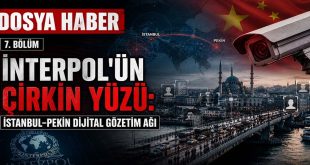

Waking up one morning to find your name on an Interpol list is a nightmare; you are left with nowhere to run and no legal system to seek refuge in. Yet, the true horror lies in the ‘ghost’ operations that begin where the law ends. In this dark corridor stretching from Lyon to Beijing, it is no longer just official bulletins that speak, but ‘Black Sites’ and double agents.”
“Is Interpol’s headquarters in Lyon being transformed into a global interrogation room, caught between Paris’s diplomatic silence and Beijing’s operational ambition? A critical MIT (National Intelligence Organization) operation that broke out in Turkey in 2024 did more than just dismantle an espionage ring; it tore away France’s ‘human rights defender’ mask, exposing in plain sight a massive espionage architecture constructed behind closed doors with Beijing.”
“In this chapter, we decipher the dirty intelligence market conducted over the backs of Uyghur Turks, the very ‘intelligence leverage’ through which states hold one another hostage, and the global surveillance system hidden beneath the mask of security. Brace yourselves; we are looking at the darkest piece of the puzzle that completes the picture.”
1- “Black Sites” and Secret Interrogation Centers
Interpol is merely the tip of the iceberg in China’s extraterritorial operations. The missing link is the “unofficial interrogation centers” that China is alleged to have established abroad, particularly in the Middle East and Central Asia.
- Unofficial Interrogation Centers: In clandestine facilities established across the Middle East and Central Asia (such as Dubai, Cairo, and Bishkek), Uyghur activists are interrogated by Chinese agents themselves, often with the tacit knowledge of local police.
- The Detail: Several Uyghur activists have reported being interrogated by Chinese agents in locations like Dubai or Cairo prior to their extradition, all while under the watch of local authorities. This method completely bypasses Interpol’s legal protocols.
- Legal Bypass: Through this tactic, Interpol’s “Red Notice” oversight is entirely neutralized. Instead of initiating a formal extradition process, individuals are detained in these “gray zones” and quietly rendered to Beijing.
The “Article 3” Armor and Legal Illusion: Sabotaging the System from Within
Article 3 of the Interpol Constitution (often detailed through the Rule 82 set) strictly prohibits the organization from engaging in activities of a political, military, religious, or racial character. While this article appears on paper as a human rights shield, it is being transformed into a massive “legal bypass” mechanism within the dark corridor of the Paris-Beijing axis.
Instead of outright violating this article, Chinese intelligence chooses to circumvent it, establishing a global “factory for manufacturing criminals.” So, how does this legal illusion work?
- Label Swapping: Beijing does not enter a Uyghur Turk—whom it defines as a “political dissident” or “religious activist”—into the system with these identities. Instead, the targeted individual is masked under common crimes such as “terror financing,” “money laundering,” or “membership in an organized crime syndicate.”
- Data Pollution: This “tainted intelligence” shared with French intelligence is converted into “technical data” at Interpol’s headquarters in Lyon. The “political persecution” barrier prohibited by Article 3 is automatically disabled the moment the nature of the crime is redefined on paper as “terrorism.”
- Legal Laundering: Once Interpol lists these individuals, Beijing’s political persecution becomes an “international legal norm” with Lyon’s seal of approval. The system does not violate Article 3; rather, it collapses the protective shield from within by renaming the crime.
“Interpol’s neutrality laws have been weaponized by authoritarian regimes. Article 3, written to protect dissidents, has today become a smoke screen for a dirty logistical procedure that packages and extradites those same people under the ‘terrorist’ label.”
A Tragedy of “Label Swapping”
To understand how this architecture causes such suffering, one need not look far into the past. What happened to Uyghur activist and academic Idris Hasan in 2021 stands as the most striking living proof of “label swapping.”
When Hasan flew from Turkey to Morocco seeking nothing more than a conference and a safe haven, what he encountered at passport control was not the profile of a “political activist,” but a “terrorist organization membership” label previously injected into the Interpol system by Beijing.
Moroccan authorities looked at the “common crime” mask on Interpol’s Red Notice and completely ignored the protective shield of Article 3—Hasan’s political refugee status. That certified “criminal” label, arriving from the headquarters in Lyon, was enough for Hasan to be quietly handed over to a plane full of Chinese agents.
This incident is the embodiment of how an academic was transformed into an “intelligence victim” through the system’s “legal laundering” mechanism, and the physical price paid for the silent agreement on the Paris-Beijing axis.
“Is Interpol, hosted by France, being sacrificed to billion-dollar aviation (Airbus) or energy deals made with Beijing? Is Paris choosing the ‘security of trade corridors’ over human rights?”
2- The “Privatization of Intelligence”: Front Companies
The MIT operation carried out in Turkey in 2024, which led to the apprehension of 10 suspects, exposed the “modern mask” of espionage. Today, agents are no longer just diplomats in suits.
A key element deepening the “10 suspects” issue in the MIT operation is that China conducts its operations not only through official diplomats or agents, but through front organizations disguised as “businesspeople,” “consultants,” or “journalists.”
- Infiltration Operations: These structures, which infiltrate Uyghur associations in countries like France and Turkey, collect data under the pretext of “humanitarian aid.” It is assessed that the 10 apprehended individuals served the information they obtained from the Uyghur diaspora to both Chinese and French intelligence services (acting as double agents).
“The moment the raw data collected from the field by these agents is entered into the Interpol database as ‘terror intelligence,’ democratic countries in Europe are legally compelled to monitor these individuals (Uyghur activists). In other words, the system functions like a ‘washing machine’ that launders lies into truth.”
3- Technological Espionage: Surveillance Under the Mask of “National Security”
China’s technological superiority is being used as leverage to infiltrate the security architecture of Western nations. Beijing carries out these operations under the guise of “Facial Recognition and Data Sharing” software used to legitimize its activities.
- Technical Vulnerabilities: Chinese-made software and hardware (such as Hikvision and Dahua), used by many Western countries—including France—to modernize their security systems, create a “backdoor” for Beijing.
- Digital Surveillance: This technological cooperation allows China to monitor Uyghur movements outside its own borders through a “technical loophole,” eliminating the need for physical surveillance.
The software used by China does more than just track; it condemns individuals to a “Digital Exile.”
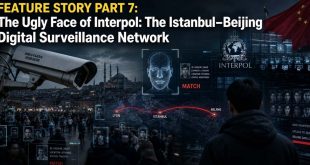
“While a person believes they are safe in Turkey or France, the moment their face is identified via a Chinese-made municipal camera or a mobile application, a red alert is triggered in the system in Lyon. This means that no matter where you go in the world, the sky itself transforms into a prison for you.”
These companies are not merely China-based; they are entities with deep-rooted ties to the Chinese Communist Party (CCP). According to Chinese law, domestic companies are mandated to share the data they collect with intelligence units upon the state’s request.
Thanks to the “backdoors” embedded in the software of these cameras, it is technically possible for the footage or facial recognition data from an internet-connected camera to be leaked to servers in Beijing.
In Istanbul, home to tens of thousands of Uyghurs, ISBAK (Istanbul IT and Smart City Technologies Inc.), operating under the Istanbul Metropolitan Municipality (IBB), manages the city’s smart infrastructure.
Although the MOBESE cameras—Istanbul’s “digital eye”—and IBB’s traffic and security surveillance do not rely on a single brand, the technological and hardware backbone of the system is dominated by Chinese-made giants. Through IBB cameras and the companies managing them, Beijing monitors tens of thousands of Uyghurs moment by moment.
Furthermore, it has been reflected in the press and public opinion that the data of 4.7 million users from the “Istanbul Senin” (Istanbul is Yours) application was transmitted to servers in the USA and Germany without authorization.
“The Danger is Closer Than Lyon: Are Istanbul’s Streets Tethered to Beijing?”
“For the Uyghur diaspora living in Istanbul, the real threat may be hidden within the lenses of tens of thousands of cameras spread across every corner of the city. Chinese technology giants like Hikvision and Dahua, whose systems are widely used in IBB’s transportation and security networks, are currently banned in the Western world on the grounds of ‘espionage’ and ‘human rights violations.’ The question of whether these ‘smart eyes’ in the heart of Istanbul—positioned in neighborhoods with the highest density of Uyghur Turks—are digital Trojan Horses transmitting biometric data to data centers in Beijing is no longer just a municipal debate; it is a national security and human rights crisis.”
The MIT Operation and Turkey’s “Chess” Move
Why 2024? Why now? With this move against the Chinese and French services—which it has melted down in the same crucible—Turkey has sent a global message:
“I will not allow you to play a chess game of espionage on my soil through the Uyghur Turks.”
This operation has proven how France’s long-standing image as a “defender of human rights” has collapsed in the face of realpolitik negotiations conducted with Beijing. The issue is no longer just the tragedy of the Uyghurs; it is a massive “intelligence leverage” used by great powers against one another.
The 2024 MIT operation completes the picture by bringing to light the realpolitik bargaining hidden beneath France’s mask of “human rights advocacy.”
“This ‘global espionage architecture’ currently being tested on the Uyghur Turks could tomorrow become the standard security protocol for the entire world. As Interpol ceases to be a police organization and transforms into a digital arena where states wash their dirty laundry and hunt down dissidents, the real question remains: Who will be the next ‘data’?”

East Turkestan Bulletin News Agency / NEWS CENTER
“10 Suspects Apprehended for Conducting Espionage Activities for French and Chinese Intelligence Services” : https://www.aa.com.tr/tr/gundem/fransa-ve-cin-istihbarat-servisleri-icin-casusluk-faaliyeti-yuruten-10-supheli-yakalandi/3144735
#Interpol #Espionage #GlobalSecurity #SurveillanceState #DataPrivacy #HumanRights #InternationalPolitics #Geopolitics #IntelligenceAgencies #CyberSurveillance #DigitalEspionage #PoliticalPressure #CrossBorderSecurity #LawEnforcement #GlobalGovernance #StateSurveillance #PrivacyRights #WatchlistSystem #RedNotice #InterpolSystem #ParisPolitics #BeijingRelations #SecurityScandal #InformationWarfare #CyberSecurityNews #InvestigativeReport #GlobalAffairs #BreakingNews #WorldPolitics #SecurityAnalysis #FreedomOfInformation
#WorldNews #BreakingNews #GlobalNews #NewsUpdate #LatestNews #HeadlineNews #NewsAlert #CurrentEvents #InternationalNews #NewsToday #PressFreedom #GlobalAffairs #WorldPolitics #Geopolitics #InvestigativeNews #ExclusiveReport #NewsReport #NewsCoverage #NewsMedia #DailyNews #TopStory #NewsFlash #GlobalUpdate #WorldReport #InformationNews #MediaWatch #TruthMatters #FactBasedNews #NewsAnalysis #RealTimeNews